The real CRM problem is not always follow-up
Most businesses are told the same thing when sales slow down: clean up the CRM, automate reminders, build a better pipeline, add email sequences, and make the team follow up faster. Those are useful fixes. A CRM should be clean. Follow-up should be visible. Sales activity should be tracked. But none of that solves the deeper problem if the business is aiming at the wrong people before they ever enter the pipeline.
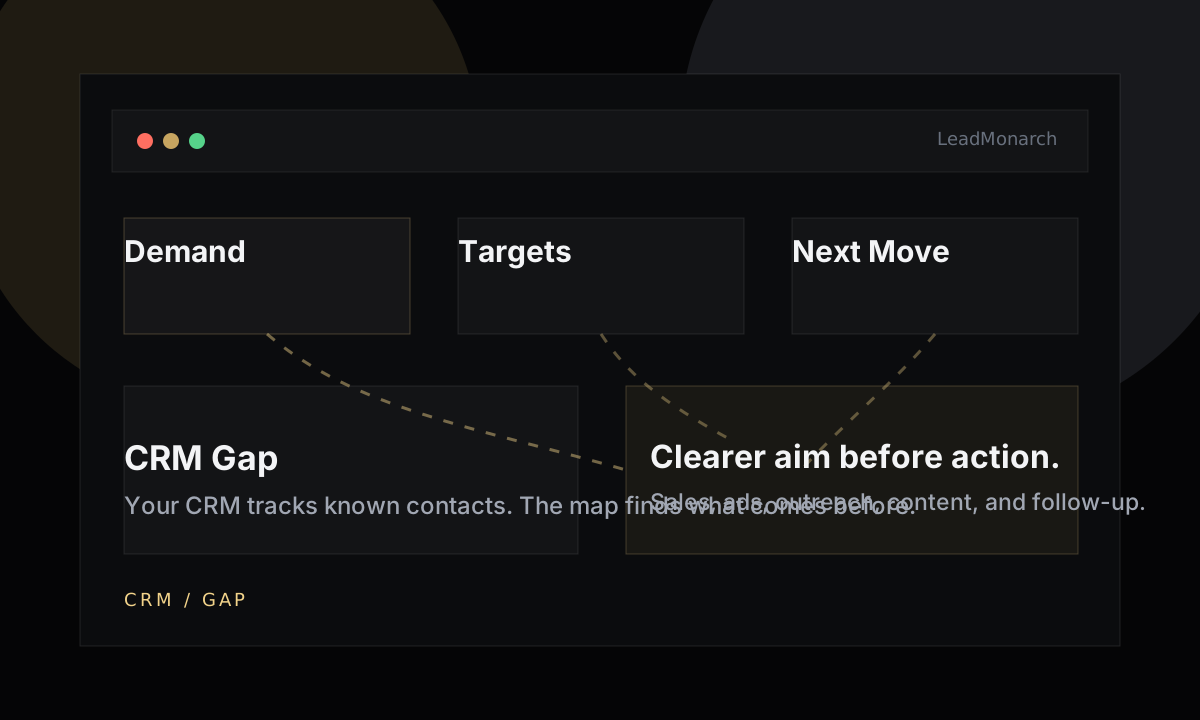
A CRM manages contacts the business already knows about. It stores names, notes, stages, tasks, calls, emails, deal values, owners, and follow-up dates. That matters after an opportunity is found. But a CRM does not automatically answer the earlier question: who should we be putting into the pipeline in the first place?
That gap is where many companies lose money. They keep improving the system that manages known opportunities while ignoring the system that should discover better opportunities. They become organized around weak leads. They follow up consistently with the wrong accounts. They build reports that show movement, but not direction.
A CRM is a memory system, not a market discovery system
A good CRM remembers what your team has already touched. It remembers that a prospect opened an email, booked a call, asked for pricing, went cold, or moved to proposal. It can remind a rep to call back. It can show which deals are stuck. It can help the owner see whether the team is doing the work.
What it usually cannot do by itself is scan the outside market and say: this segment is showing stronger demand, this company looks like a better fit, this service category is heating up, this competitor has a weak spot, this business is running ads but has a broken website, this buyer segment is easier to reach, or this location deserves the next campaign.
That does not make the CRM bad. It just means the CRM is not the whole growth system. The better model is simple: use an opportunity system to decide where to aim, then use the CRM to manage the work after you aim.
Why more leads can make the problem worse
When a business needs revenue, the easy answer is more leads. Buy another list. Scrape another directory. Run another campaign. Increase ad spend. Add another form. Hire another setter. Push more names into the CRM. On paper, that looks like growth activity. In practice, it can create more noise.
More leads do not help if the list is poorly aimed. A bad-fit company still wastes time even if the phone number is correct. A low-value low-fit consumer still drains attention even if they fill out the form. A market with weak demand still burns ad budget even if the creative is polished. A prospect with no urgency still clutters the pipeline even if the CRM stage says qualified.
This is why some businesses feel busy but not sharper. The CRM fills up. The team has tasks. The dashboard has activity. But revenue does not move the way it should because the inputs are weak.
What better customer targeting looks like
Better customer targeting starts before outreach. It asks practical questions: which customer types have the strongest need, which locations have active demand, which businesses match our best deal profile, which signals show that a target may be worth contacting, and which segments should we ignore for now?
For a B2B company, that may mean comparing segments, property types, map results, competitor density, review patterns, search volume, and service-area economics. For a B2B service provider, it may mean finding companies with the right size, offer fit, hiring signals, ad activity, website gaps, recent funding, expansion, or operational pain. For an ecommerce brand, it may mean finding pockets of demand, influencers, retail partners, competitor audiences, or product categories where buyers are already searching.
The point is not to create a fancy report. The point is to decide where the next sales, ads, outreach, or content move should go.
The opportunity layer your CRM is missing
A custom opportunity system adds a layer before the CRM. It discovers targets outside your existing database, enriches them with useful context, scores them against your real offer, and turns them into recommended actions. It can show who to contact, why the target matters, what market they belong to, which service angle fits, and what move makes sense next.
This layer can pull from search behavior, maps, business directories, websites, competitor pages, ads, public databases, review platforms, local signals, CRM history, and enrichment sources. The stack can be technical, but the output should be plain: here are the best targets, here is why they matter, and here is what to do.
That is the difference between a CRM full of names and a business system with aim.
How CRM data still makes the system smarter
The CRM is not useless in this model. It becomes more valuable because the opportunity system can learn from what happens after targets are contacted. Which types respond? Which locations convert? Which company profiles become real deals? Which ad audiences book calls? Which service categories create the best profit? Which segments waste time?
Over time, that feedback helps sharpen targeting. The system does not need to pretend it can magically predict every buyer. It only needs to get more disciplined about patterns. If a certain kind of account never responds, the score should drop. If a certain market produces better calls, the score should rise. If one offer angle creates stronger conversations, the next campaign should reflect it.
That is how a business moves from random activity to a learning growth system.
What to measure before you chase more leads
Before paying for more leads, a business should look at fit rate, contactability, response rate, booked-call rate, close rate, deal value, sales cycle, margin, location quality, and repeatability. A lead source that produces many names but few good conversations is not a growth engine. It is a distraction.
The same is true for CRM stages. A pipeline with hundreds of weak opportunities can look impressive but hide the real issue. The better question is: what percentage of these opportunities match the customer profile we actually want? If the answer is low, the CRM is not the bottleneck. Targeting is.
Strong systems protect the team from chasing low-quality opportunities just because they are available.
The simple operating rhythm
A useful rhythm is weekly, not theoretical. Review new opportunities found. Check why they were selected. Approve the best segments. Push the right targets into the CRM. Run the recommended outreach or ad move. Track what happened. Feed the results back into the system. Repeat.
This rhythm gives the business a clearer way to grow. It stops the owner from asking, 'who should we call this week?' with no evidence. It stops the marketing team from guessing where ads should run. It stops the sales team from working lists that nobody believes in.
The business still has to execute. The system does not close deals by itself. But it gives the team better aim before execution starts.
Practical checklist before adding more CRM automation
Before you add another automation, ask whether the contacts entering the CRM are worth the same level of attention. Review the last fifty opportunities and label them honestly: good fit, bad fit, wrong location, too small, no urgency, no budget, wrong decision maker, strong potential, or unclear. This one exercise often reveals that the CRM is being asked to manage a targeting problem.
Then check the source of each opportunity. Did it come from paid search, referral, cold outreach, a directory, social content, a purchased list, an old customer, or a website form? Compare source against deal quality, not just lead volume. The source producing the most names may not be the source producing the best customers. That difference is where better growth decisions start.
Example: how this changes a weekly sales meeting
In a normal sales meeting, the team reviews pipeline stages and asks why deals are stuck. In a better meeting, the team also reviews what entered the pipeline and whether those opportunities deserved to be there. The owner can ask: which new targets match our best customer profile, which came from weak sources, which markets are improving, and which segments should we stop feeding into the CRM?
That makes the meeting more useful. Instead of only managing follow-up, the team improves aim. Marketing learns which targets sales actually wants. Sales sees the reason behind new opportunities. The CRM becomes the execution layer for a smarter targeting system, not a dumping ground for every name the business can find.
Common CRM growth mistakes
One mistake is treating every contact as equal because the CRM stores them in the same format. A high-fit account and a random form fill both become records, but they should not receive the same attention. Another mistake is measuring activity instead of quality. Calls made, emails sent, and tasks completed do not mean much if the market selection is wrong.
A third mistake is buying software to solve a strategy gap. If the business does not know who it wants, where demand is happening, or which signals matter, a new CRM feature will not create clarity. It may only automate confusion faster.
How a custom opportunity system supports the CRM
A custom opportunity system can sit upstream from the CRM and do the discovery work the CRM was never designed to do. It can scan markets, find targets, enrich businesses, score fit, explain why an account matters, and recommend whether the target should be contacted now, watched, nurtured, or ignored.
Only the right opportunities should move into the CRM. When they do, they should arrive with context: the reason selected, the recommended angle, the source signals, the priority, and the next move. That creates cleaner handoff and better sales execution.
Questions to ask before your next CRM review
Ask which customers created the most profit, which sources created the most noise, which stages are full of weak opportunities, which deals should never have entered the pipeline, which markets are underrepresented, and which targets the team wishes it had more of. Those questions shift the conversation from CRM hygiene to business direction.
Also ask what information a salesperson needs before the first call. If the answer includes market context, reason selected, service fit, buyer pain, or best next action, that is proof the CRM alone is not enough. Those details need to be created before the record lands in the pipeline.
How to start small without overbuilding
The first version does not need to be complicated. Pick one offer, one market, and one customer profile. Build a small target discovery process around that lane. Score the opportunities with five or six simple signals. Push only the best records into the CRM. Review results weekly.
Once that works, expand carefully. Add more sources, more markets, better scoring, CRM integrations, weekly reports, and campaign recommendations. The mistake is trying to build a giant intelligence platform before proving which signals actually help the business make money.
Bottom line
Your CRM is important, but it is not enough. It is the place where known opportunities are managed. It is not the whole system for finding better customers, discovering demand, scoring targets, and deciding what move to make next.
If your business already sells something real and already uses a CRM, the next upgrade may not be another automation. It may be a custom opportunity system that shows where to aim before the next contact ever enters the pipeline.
Want this built around your business?
If your business already sells a real product or service and needs better direction on who to target next, apply for a LeadMonarch AI Growth Scan or custom opportunity build.
Start the application →