A name is not a strategy
Lead lists are easy to sell because they look tangible. A spreadsheet full of names, websites, emails, phone numbers, locations, and industries feels like progress. The business can scroll through rows and feel like there is a market waiting to be contacted.
But a list rarely answers the questions that actually matter: why does this target fit, what signal makes them worth contacting now, who is the right contact path, what offer angle should we use, how valuable could they be, and should we prioritize them over other targets?
Without that context, a lead list becomes a pile of chores. Someone still has to figure out what matters.
What a lead list usually misses
A basic list may include company names, addresses, categories, emails, phone numbers, and websites. Those fields are useful, but they are not enough. They do not explain urgency, market relevance, competitor gaps, decision-maker paths, ad activity, service fit, location quality, or recommended action.
That missing context creates wasted work. Sales reps send generic messages because they do not know why the target matters. Owners run ads toward broad audiences because they do not know which segment is strongest. CRM records become cluttered with weak prospects because nobody scored fit before importing them.
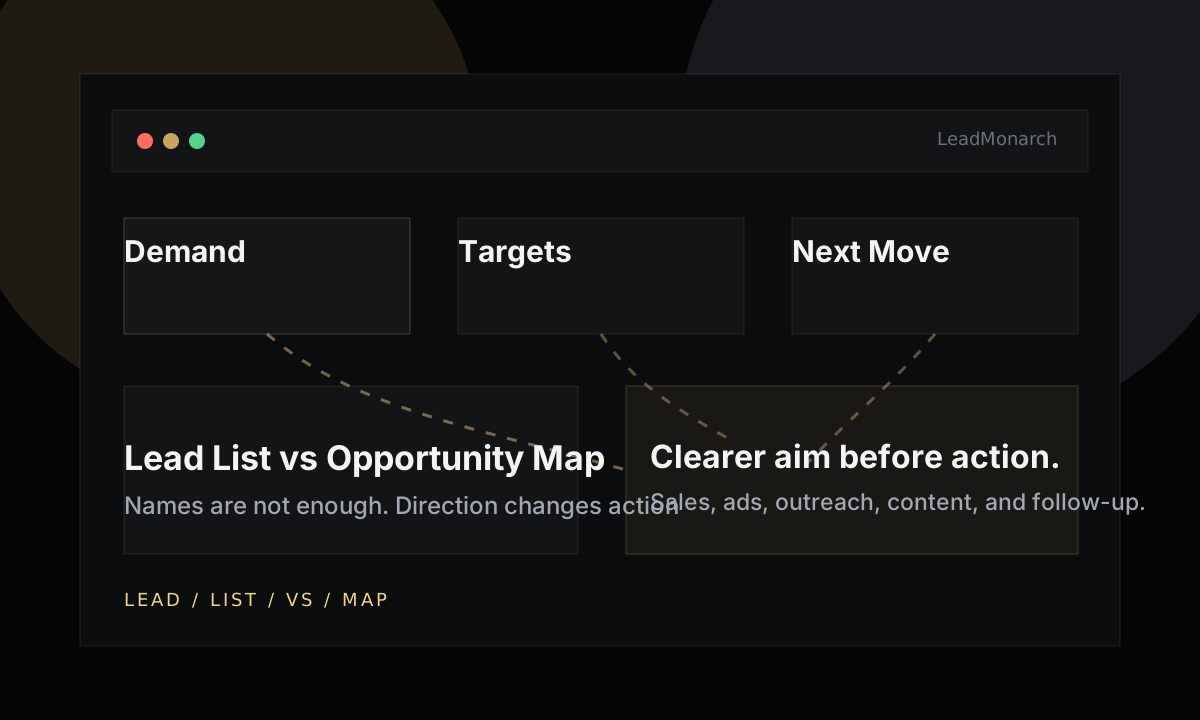
A list gives you data. A opportunity map gives you direction.
A opportunity map connects targets to signals
A opportunity map is a custom system that connects targets to the reasons they matter. It may show that a business matches the ideal customer profile, operates in a strong location, has weak competitors nearby, is running ads, has website gaps, has hiring activity, appears in a high-demand category, or fits a specific offer.
Those signals make outreach more intelligent. Instead of 'we found your company online,' the sales angle can be tied to a real observation. Instead of advertising everywhere, the business can push budget toward a market with stronger evidence. Instead of chasing every possible account, the team can focus on the top opportunities first.
Context changes how the work gets done.
Priority is where opportunity maps become useful
Most businesses do not suffer from a lack of possible targets. They suffer from a lack of priority. There are too many companies, too many locations, too many keywords, too many segments, too many campaign ideas, and not enough time to chase all of them well.
A opportunity map scores and organizes opportunities so the business can decide what deserves attention now. Fit, location, demand, contactability, deal value, urgency, competition, and sales history can all influence priority. The goal is not a perfect score. The goal is a better first move.
When the system can say 'start here,' it becomes more valuable than a raw database.
A opportunity map helps sales and marketing work from the same truth
Sales and marketing often work from different assumptions. Marketing may chase broad traffic. Sales may complain about quality. The owner may push whatever feels urgent. A opportunity map gives everyone a shared view of the best targets, markets, and reasons.
That shared view helps campaigns line up. The ad team knows which locations matter. The sales team knows which accounts are priority. The owner knows why a segment is being pursued. The CRM receives cleaner opportunities. Follow-up becomes more focused.
Growth feels less random when the team can see the same map.
Examples of lead list thinking vs. opportunity map thinking
Lead list thinking says: here are 500 B2B businesses. Opportunity-map thinking says: here are 42 businesses that match your best customer profile, sit in high-value areas, have weak online positioning, and should be contacted with this offer angle.
Lead list thinking says: here are low-fit consumers in your target market. Opportunity-map thinking says: these segments show stronger search demand, better job value, lower competitor quality, and should receive ads before the rest of the city.
Lead list thinking says: here are ecommerce stores. Opportunity-map thinking says: these brands show growth signals, ad activity, weak retention content, and contact paths that match your service.
Why cheap lead generation feels attractive
Cheap lead generation is attractive because it promises speed. Pay a small amount, receive a list, start contacting. For some businesses, that can be useful as a starting point. But cheap lists become expensive when they waste sales time, damage sender reputation, clutter the CRM, or push the business toward weak segments.
The real cost is not the spreadsheet. The real cost is the work your team spends chasing unclear opportunities. If a rep spends five hours on bad targets, the list was not cheap. If ads run for a month in the wrong location, the targeting was not cheap.
Better aim can be worth more than more names.
What to ask before buying another list
Before buying or building another list, ask: what signals qualify a target, why would they buy now, what makes this segment valuable, how will we contact them, what message fits, what should be ignored, and how will results feed back into targeting?
If those questions are unanswered, the list is not a growth system. It is raw material. Raw material can help, but only if the business has a way to turn it into decisions.
A opportunity map is the system that turns raw market data into focused action.
What should be inside a real opportunity map
A useful opportunity map should include target name, website, location, category, fit score, contact path, source signals, reason selected, possible offer angle, priority, status, owner, and recommended next move. For B2B businesses, it may also include target market, map visibility, review patterns, and location score. For B2B companies, it may include company size, hiring, ads, decision makers, and technology clues.
The exact fields should match the business. The point is not to collect everything. The point is to collect enough context to make a confident move.
How a opportunity map improves outreach
Outreach is better when the reason for contact is specific. A rep can write a stronger message when they know the target was selected because of a real market signal. The message can reference the relevant service, location, growth pattern, competitor gap, or operational need instead of sounding like a generic cold pitch.
That does not mean every message should pretend to know too much. It means the business can avoid lazy outreach. Better target context gives salespeople sharper angles and more confidence.
How a opportunity map improves advertising
A lead list mostly helps direct outreach. A opportunity map can also guide ads. If several high-value targets cluster in a location or segment, the business can build a campaign around that market. If certain services show stronger demand, ads can focus there first. If a segment is low-fit, it can be excluded before budget is wasted.
This is why the map matters more than the list. It connects sales targeting, ad targeting, and market research into one operating view.
When a basic lead list is still useful
A basic lead list is not always bad. It can be useful when the business already has strong filters, a clear offer, a proven outreach process, and a team that knows exactly how to qualify targets. In that case, the list is raw supply for an existing machine.
But if the business does not know which targets matter or what action to take, a list alone will not solve the problem. It will only move the confusion into a spreadsheet.
Questions to ask before importing targets into your CRM
Why does this target belong in the CRM? What signal made it worth attention? Which offer fits best? Who should contact them? What is the recommended first action? What would make this target disqualified? If the answers are missing, the target may not be ready for sales follow-up.
This simple gate keeps the CRM cleaner. It prevents the business from turning every possible name into an active sales task. The CRM should hold opportunities with enough context to be worked well.
How to build the first version of a opportunity map
Start by defining the best customer profile and the no-fit profile. Then gather targets from a few sources: search, maps, directories, competitor research, CRM history, and public business data. Enrich each target with only the fields needed to make a decision. Score fit and write a plain-English reason for each priority target.
The first version can be simple. What matters is the discipline: every target needs a reason, a priority, and a next move. That is what separates a opportunity map from a list.
Frequently asked questions about lead list vs opportunity map
How do I know if this is a targeting problem? If your team is doing the work but the opportunities are weak, inconsistent, low-value, hard to reach, or outside your best-fit customer profile, the issue is probably upstream. Sales execution still matters, but stronger execution cannot fully fix poor aim.
What data should a small business start with? Start with the data you can actually use: closed customers, lost deals, target markets, search terms, competitor pages, reviews, ad performance, CRM notes, and public business information. You do not need a massive data warehouse to make better decisions. You need the right signals organized around the next move.
How often should the system be reviewed? Weekly is usually enough for active growth. A weekly review gives the business time to collect new opportunities, check what happened from the last actions, and decide what sales, ads, outreach, or content move should happen next. Monthly reviews are better than nothing, but they can be too slow when cash flow matters.
Can AI help with find more customers? Yes, but only if it is tied to real business rules. AI can summarize pages, classify targets, score opportunities, draft research notes, generate campaign ideas, and explain why a target may matter. It should not replace judgment. It should make the operator faster and better informed.
What is the first step? Pick one offer, one customer type, and one market. Build a simple opportunity view around that lane. Find the targets or locations that show the strongest evidence, write the reason they matter, choose the next action, and track whether the action worked.
The operator's rule
The operator's rule is simple: do not make the next growth move until you can explain the target, the reason, the expected value, and the follow-up path in plain English. If the explanation sounds vague, the business is probably guessing. If the explanation is specific, the team can act with more confidence.
This rule is useful because it cuts through tool noise. It does not matter whether the data came from search, maps, CRM history, paid ads, enrichment, public websites, or manual research. The question is whether the evidence helps the business decide where to aim and what to do next.
That is the standard LeadMonarch AI builds around. The system should not impress the owner with complexity. It should help the business make a sharper move than it would have made without the system.
Bottom line
One more point: the business does not need perfect certainty before acting. It needs enough evidence to make a better decision than yesterday, then a feedback loop that shows whether that decision worked.
A lead list gives names. A opportunity map gives context, priority, reasoning, and recommended action. If your business already has a sales process, the bigger win may not be more names. It may be knowing which names matter, where demand is strongest, and what move to make next.
That is why LeadMonarch AI builds custom opportunity-intelligence systems instead of selling generic lists. The goal is not to dump data on your team. The goal is to show where the money is most likely to be.
Want this built around your business?
If your business already sells a real product or service and needs better direction on who to target next, apply for a LeadMonarch AI Growth Scan or custom opportunity build.
Start the application →